

Subscribe to the Free Print Edition now!
Defense Systems Wednesday, August 20, 2008

Current Issue eSeminars Jobs FAQ
1105 Media [purity]
quickfind
purchase
reprint
link to
this page
categories
C4ISR
Network-Centric Warfare
Training and Simulation
Security and Intelligence
online resources
White Papers
RSS Feed
Military Links
1105 Media, Inc.
» Government Computer News
» Government Leader
» Washington Technology
» FOSE

home > September 10, 2007 issue > article

|  Agency Recon  |

James Chance/WPN
“What is the appropriate level of training and education? Because obviously it’s going to be much different for an 18-year-old coming out of high school than for a bird colonel or brigadier general.” — CCR Director Richard Raines
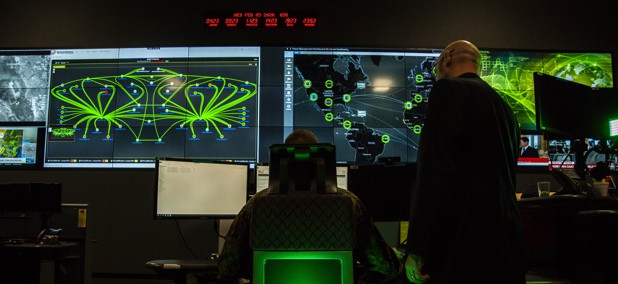
Cyberwarrior training in progress


The Air Force’s tech graduate school and Center for Cyberspace Research are helping the service prepare for its forthcoming Cyber Command

As they began laying the groundwork for the Air Force’s newest command, service officials realized that one resource was absolutely essential: intellectually curious and creative men and women wielding well-sharpened logic and technology skills in defense of their country.

To help develop this elite cadre of cyberwarriors, the Air Force Cyber Command, on target for activation this fall, is looking to the Air Force Institute of Technology (AFIT) and its Center for Cyberspace Research (CCR) at Wright-Patterson Air Force Base, Ohio.

Known until this year as the Center for Information Security Education and Research, CCR is a component of the institute’s Graduate School of Engineering and Management.

AFIT has been teaching engineering skills since its founding in 1919, and the graduate school has been offering courses in informaton technology security and cyberwarfare since 1995, said CCR Director Richard Raines.

In June, 13 airmen became the first class registered for AFIT’s new graduate degree in cyberwarfare, said Raines, who is continuing to fine-tune the program and also teaches cyberwarfare classes in the school’s electrical and computer engineering department.

A change in culture will be necessary to create a command capable of “full spectrum, integrated operations,” said Lt. Gen. Robert Elder Jr., commander of the 8th Air Force and future commander of the Cyber Command.

But the culture change necessary for the new command to succeed may not be the one that Air Force leaders anticipate nor one that Air Force educators can deliver, some military and industry observers say.

Beginnings
On Dec. 7, 2005, Air Force Secretary Michael Wynne, an AFIT graduate, added cyberspace to the Air Force’s mission, effectively turning the first shovel of earth in building the service’s cybercommand.

Given the permission in November 2006 to begin building the new command, Elder took only eight months to prepare the “on-ramp” for the new command. “My piece of this is in place now,” he said in July. The command now has an organizational structure and a way to define resource needs; also in place are a recruiting scheme and a career path in cyberoperations, he said.

Meanwhile, training and staffing the new command are more complex tasks. In January 2006, Air Force Chief of Staff Gen. Michael Moseley named National Defense University professor Lani Kass to lead a Cyber Task Force (CTF) to create the armature for doing the job.

“The task force is a working group composed of people from all over the Air Force, including AFIT; together, they’re charged with defining what it will take to organize, train and equip people for the Cyber Command,” explained CCR Associate Director Rusty Baldwin.

A CTF workshop in January “brought together 49 experts from across the Defense Department to help us understand and develop the skill sets that would be necessary for the folks who will be supporting Gen. Elder,” Raines said. “We’re still in the process of defining those.”

A second workshop in March focused on defining cyber competencies for all Air Force members. Since then, CCR has continued to work closely with the 8th Air Force to develop those guidelines. “We’re working with the Air University, AFIT’s parent organization at Maxwell Air Force Base, Ala., to define what every airman needs to know about cyberspace,” Raines said.

“And when we say ‘airman’ we mean not only enlisted and officers but also civilians [who] work in the Air Force,” he said. “What is the appropriate level of training and education for each of them? Because obviously it’s going to be much different for an 18-year-old coming out of high school than for a bird colonel or brigadier general.”

Raines held a third workshop in late August.

Defining the cyberwarrior
To understand the scope of the mission, it is important to realize that the cyber domain is not limited to the Internet.

“When people think about cyberspace, they typically think about networks and desktops,” Raines said. “IP networks are a part of it, but there are also a lot of different non-IP networks: telecommunication systems, power and transportation systems, radars, satellites and all kinds of systems that are networked together.”

A single unmitigated breach could allow an enemy to inflict damage, Kass said. “Picture for a second that you’re trying to fix an aircraft, and all the information in your computerized manuals has been corrupted and you begin to put things together backward.”

Working with groups such as the Air Command and Staff College and Doctrine Center at Maxwell Air Force Base, Ala., CCR is developing competencies in an introduction to policy; military organization and strategy, and cyberwarfare organizations, policies and operations.

Those areas include educational elements such as “understanding as well as differentiating a net attack from an electronic attack and their implications in the cyberwarfighting domain,” an AFIT spokesman said. CCR has identified and is developing more than 70 such elements.

A cyberwarfare master’s degree doesn’t come with a guaranteed ticket to the Cyber Command, Raines said. “But I can say they’ll be getting the skill sets to make strategic decisions in cyberwarfare.”

If defining the education to meet the challenges of warfare in the cyber domain is daunting, delivering on it is even more rigorous. “Right now, we’re taking introduction to information warfare, computer forensics, computer networking, cyber defense and how to protect networks and other cyber assets,” said Maj. Sean Murphy, one of the first cyberwarfare degree candidates. “There’s a lot of information, a lot of reading, a lot of projects, a lot of research papers, and if you’re not in class, you’re usually in a library or in a computer lab.”

The group is perceived by some as nerdy. One Air Force blogger pokes a little fun with slides of a mock “initial cadre ... selected from Air Force Comm officers, Dungeons and Dragons chat rooms and Star Trek conventions.”

But this is no geek squad in training. For Murphy and his classmates, the degree program is part of Air Force-required intermediate developmental education.

Until June, Murphy was a member of the Air Force Communications Agency at the White House, offering technical support to the president and Secret Service. Others in the class are aviators, communications officers, intelligence officers. More than just mathletes, these cyberwarriors are — and must be — warfighters.

“Cyberspace is a strategic, operational and tactical warfighting domain — a place in which the Air Force or other services can fight,” Kass said. “It is a domain in and through which we deliver effects — fly and fight, attack and defend — and conduct operations to obtain our national interests.”

Commandos wanted
Meeting these challenges will require a cultural change “from cyber as a force enabler to a warfighting force,” Elder said.

“It’s a change, but I’d say that making that cultural change depends on getting the skill sets you need, the training you need to make that change, to feel comfortable with it,” Murphy said.

“I’d also say it’s important to get the right people to get the skills,” he said. “I’m not sure how you do that or where you find the right people. Do you go after the kid with computer skills?” Probably, said Jim Stogdill, a former Navy submarine officer, now chief technology officer at defense contractor Gestalt LLC. “Go to an open-source conference or a hacker convention and see who the top guys are. There’s not much about them that’s military.”

Warfighting in the cyber domain will mean “a different kind of attack,” he said. “The new cyberwarrior will need to think fast and creatively, maybe writing software on the fly to deflect an assault to launch an attack.”

Attracting them may be problematic, Stogdill said. The Air Force “may want to rethink its recruiting strategy at schools like [University of California at] Berkeley.”

Embracing the new command’s differences could be an effective recruiting strategy, much as it was with the first Army Rangers, he said.

President Roosevelt created the Rangers in 1942 as an elite force that could strike swiftly and successfully, helping to restore public confidence in U.S. troops. The first Rangers underwent months of grueling commando training — men were killed during live-fire exercises. They eschewed regular practices such as saluting and wore black berets instead of Army-issue caps.

A little romance, a little publicity might not hurt. Cyberwarfare training didn’t top Murphy’s dream sheet. But after a few weeks at AFIT, it’s “my first choice, without a doubt,” he said. “I just did not understand how interesting and how big it was until I got here.”


purchase
reprint
link to
this page
ADVERTISE CONTACT US CUSTOMER HELP EDITORIAL INFO SITE MAP